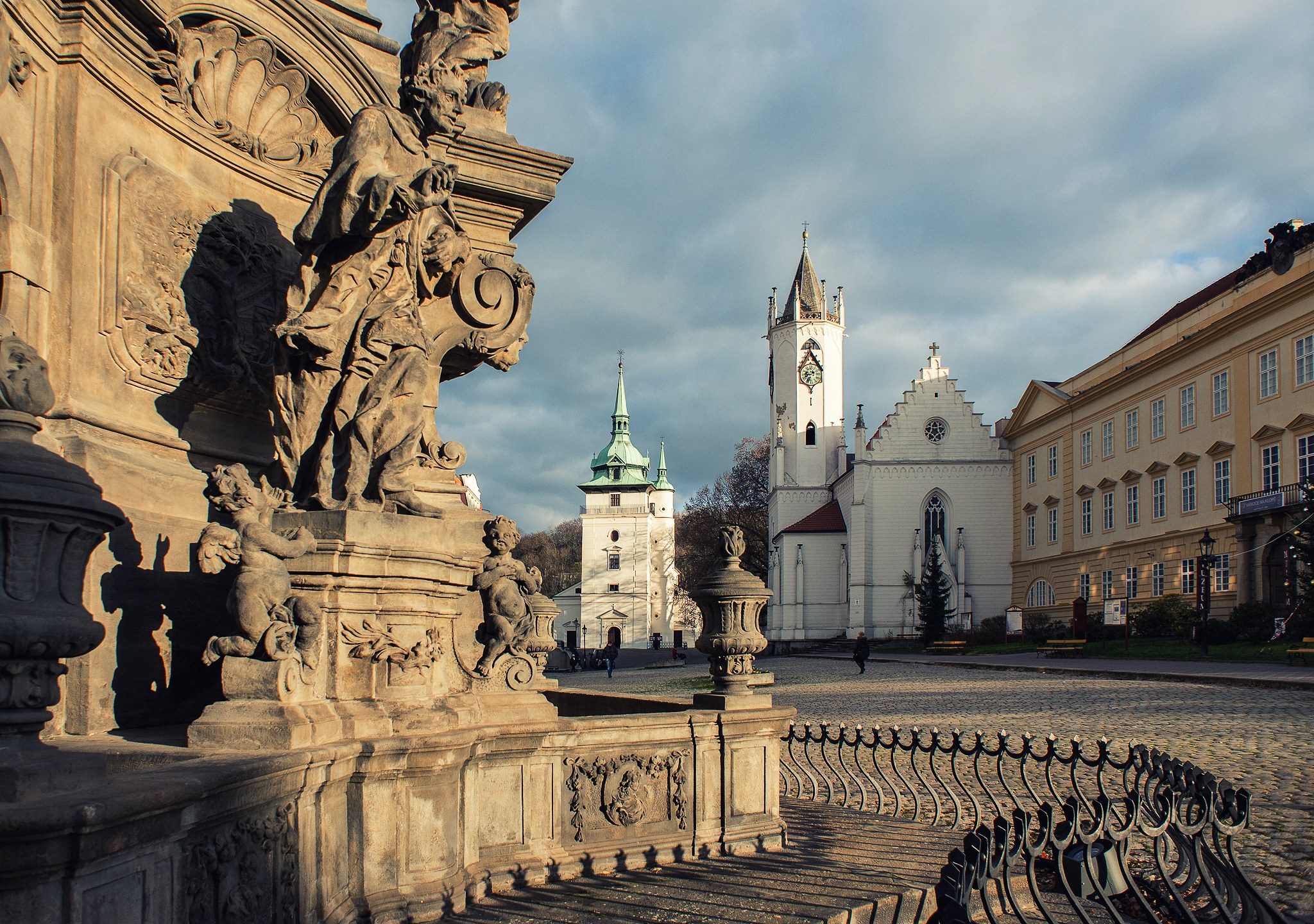




In mid-November 1989, Teplice became the scene of events that reached far beyond the city’s borders. Between November 11 and 13, spontaneous environmental demonstrations took place in response to the extreme air pollution that afflicted the city during a period of strong temperature inversion. Smog caused by coal-fired power plants and local heating sources was so suffocating that people took to the streets wearing face masks and carrying a simple yet urgent slogan: “We want to live!”
The initiative came from a group of young people who met at the pub U Ptáčků and had already begun putting up posters and distributing leaflets days earlier, drawing attention to the critical state of the environment and the lack of concern shown by the authorities for public health. The first demonstration took place on Saturday, November 11. According to security records, around 400 people participated, though eyewitnesses speak of up to twice that number.
The protests were of exceptional significance: the communist regime failed to suppress them and was forced to allow a public discussion on air pollution. Teplice thus became the site of the first open civic protest demonstrating that fear of state power was beginning to fade. Just a few days later, following the violent crackdown on a student demonstration in Prague on November 17, these events merged into a broader movement that ultimately led to the fall of the communist regime.