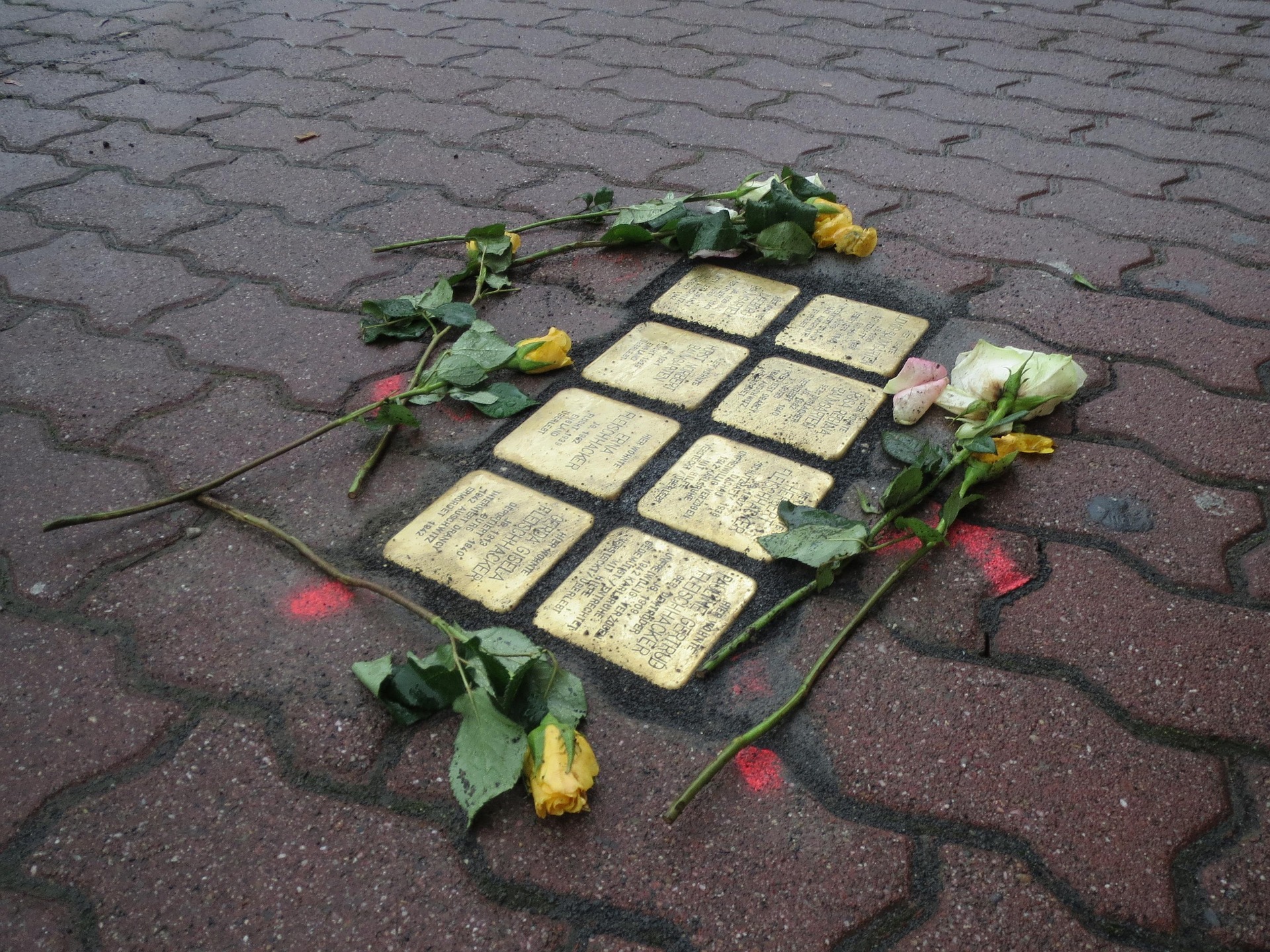




Stolpersteine (“stumbling stones”) are a memorial project commemorating the victims of Nazi persecution between 1933 and 1945. The stones bear the names of Jews, Roma, and other persecuted individuals who were deported from Teplice and murdered. Today, more than 30,000 such memorial stones can be found across Europe.
The idea to implement the Stolpersteine project in the Czech Republic emerged in 2008 among young Czech Jews inspired by similar memorials in Germany. Over time, the project expanded to Teplice, where the first stones were laid personally by the project’s initiator, the German artist Günter Demnig from Cologne. The installation of Stolpersteine in Teplice takes place in cooperation with the Jewish Community of Teplice and other institutions.
The stones are symbolically embedded in the pavements in front of the houses where the victims last lived freely. It is not uncommon for several stones to be placed together, usually commemorating entire families who were murdered and who can thus remain united at least in this symbolic form.
Stolpersteine quietly become part of everyday life in the city. They invite passers-by to slow down, lower their gaze, and realize that history is not only found in textbooks, but also in the streets we walk every day.